Medical dermatology
Skin cancer: prevention, early detection and treatment
Most skin cancers can be cured if they are found early. In El Salvador, with strong sun all year round, prevention and skin checks are essential.
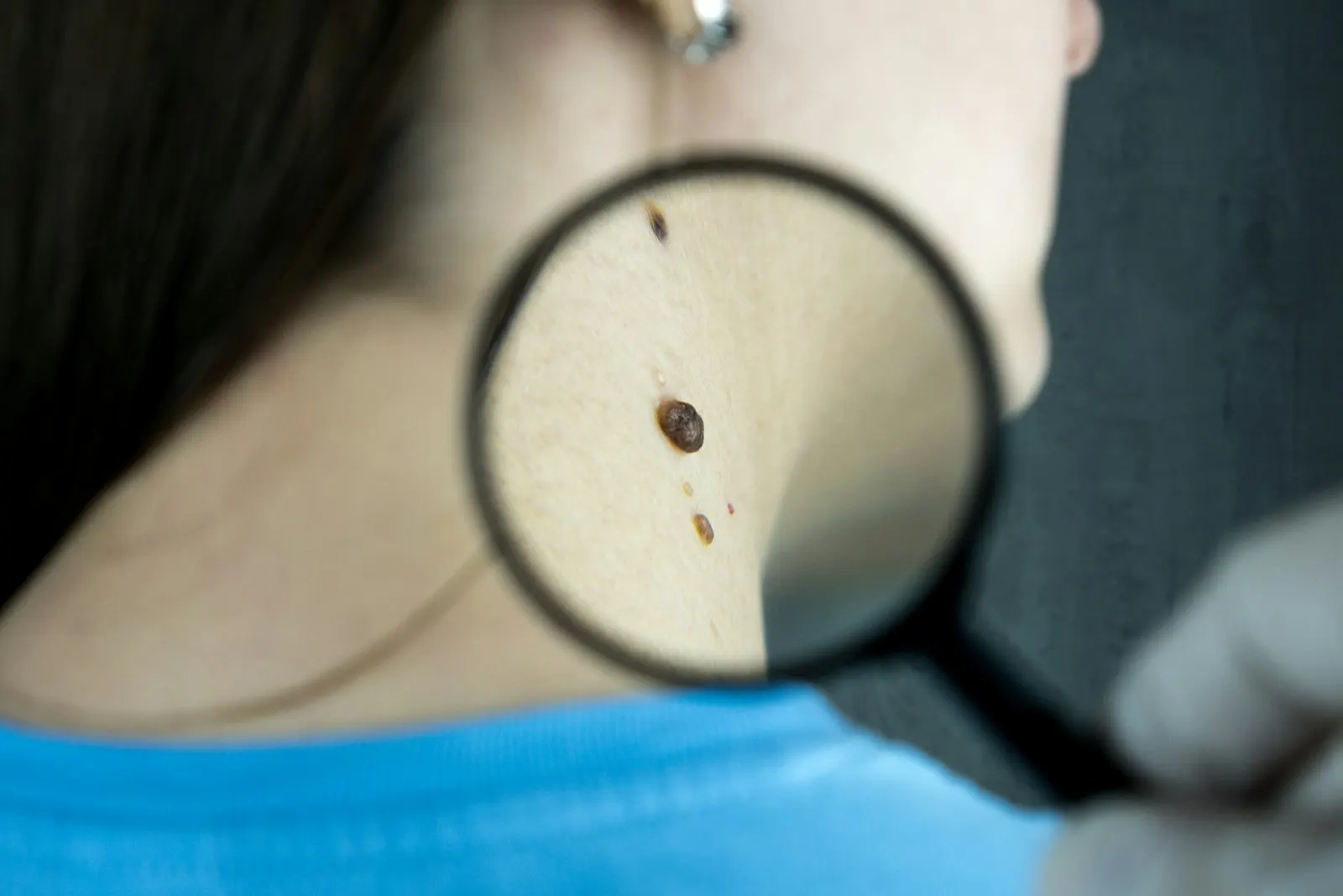
What is skin cancer?
It is the uncontrolled growth of skin cells. The most important cause is sun exposure accumulated over a lifetime, along with sunburns. The most common types are:
- Basal cell carcinoma: the most common. It grows slowly and almost never spreads to other organs, but it can damage the skin and nearby tissue if it is not treated.
- Squamous cell carcinoma: appears mainly on areas with a lot of sun exposure, such as the face, ears, lips and hands. It must be treated promptly.
- Melanoma: less common, but the most dangerous, because it can spread to other parts of the body. When it is found early, the outlook is much better. See mole checks.
Warning signs
See the dermatologist if you have:
- A pimple or sore that does not heal after several weeks, or that bleeds easily.
- A shiny, pink or pearly spot or bump that keeps growing.
- A rough or crusty patch that does not go away, on the face, ears or hands.
- A new mole, or one that changes shape, size or color.
Who is at higher risk?
- People with fair skin or who burn easily.
- People who work or spend many hours in the sun.
- People who have had frequent sunburns, especially in childhood.
- People with many moles or atypical moles.
- People with a personal or family history of skin cancer.
- People with a weakened immune system due to illness or medicines.
How we assess and treat it
- Skin examination: the doctor examines suspicious lesions and, if needed, all of your skin.
- Biopsy: if a lesion looks suspicious, a small sample is taken under local anesthesia and sent to the pathology lab to confirm the diagnosis.
- Treatment: depending on the type, size and location of the cancer, it may include surgical removal of the lesion or other treatments. When needed, care is coordinated with other specialists.
- Follow-up: people who have had skin cancer are more likely to develop another one, so regular check-ups are scheduled.
How to prevent skin cancer in El Salvador
- Avoid direct sun between 10:00 and 16:00, when it is strongest.
- Use broad-spectrum SPF 30 or higher sunscreen every day on all exposed areas. Reapply every 2 hours if you are in the sun, and after sweating or swimming.
- Wear a wide-brimmed hat, sunglasses and long sleeves when you work or spend time outdoors.
- Don't forget your ears, neck, the backs of your hands and, if you have thin hair, your scalp.
- Protect children from an early age: sunburns in childhood increase the risk in adulthood.
- Do not use tanning beds.
- Check your skin once a month and see a dermatologist if you notice anything new or changing.
Frequently asked questions
Can skin cancer be cured?
Most skin cancers are cured if they are found and treated early.
Can people with darker skin get skin cancer?
Yes. The risk is lower than in fair skin, but it exists, and sometimes it is diagnosed later. Any lesion that does not heal or that changes should be checked.
Does a skin biopsy hurt?
Local anesthesia is used, so the discomfort is minimal. It is a quick procedure done at the clinic.
How often should I have my skin checked?
It depends on your risk. The dermatologist will tell you how often you should have check-ups.