Hair
Hair loss and alopecia: diagnosis and treatment
Hair loss has many causes and each one is treated differently. In the consultation we find out why your hair is falling out and explain your options.
Dr. Leana Quintanilla trained in hair transplantation and has kept up to date in trichology and hair restoration. She has lectured on hair loss in women and on medical treatments for hair loss at dermatology congresses.
Is it normal to lose hair?
Yes, up to a point. Losing 50 to 100 hairs a day is normal, as part of the hair's natural cycle. It is worth seeing a dermatologist when you are losing more hair than usual, when it lasts more than two or three months, or when you notice your hair is thinner, your part looks wider or you have a receding hairline or bald patches.
Most common causes
Androgenetic alopecia (hereditary hair loss)
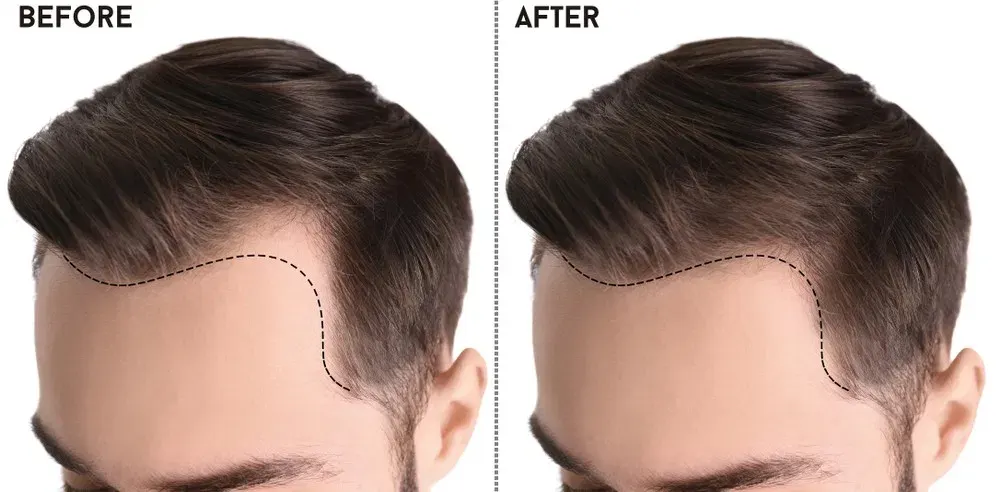
This is the most common cause in men and women. The hair gradually becomes thinner: in men, with a receding hairline and loss at the crown; in women, with less density on top of the head and a wider part. Genetics and hormones play a role.
Telogen effluvium (temporary diffuse shedding)
Sudden, heavy shedding all over the head, which usually appears 2 to 3 months after an event such as a high fever, infections (including COVID-19), surgery, childbirth, severe stress, strict diets or changes in medication. It generally improves once the cause is corrected.
Also read: Stress and your skin
Alopecia areata
Round, hairless patches appear suddenly on the scalp, beard or eyebrows. It is caused by a disturbance of the immune system. It can be treated.
Medical and nutritional causes
Thyroid disorders, anemia or iron deficiency, nutritional deficiencies, hormonal changes and some medicines.
Scalp conditions
Fungal infections (tinea capitis, common in children), severe seborrheic dermatitis, psoriasis and inflammatory alopecias that can leave scarring if not treated in time.
Damage from pulling or chemicals
Very tight hairstyles, extensions, straightening treatments and harsh dyes can break the hair or damage the follicles.
Read more: Hair loss in men and women
When should you see a dermatologist?
- If the hair loss lasts more than 2 or 3 months.
- If you see areas with less density or bald patches.
- If the hair loss comes with itching, pain, burning, flaking or redness of the scalp.
- If baldness runs in your family and you want to act early.
- If you notice hair loss in your eyebrows, eyelashes or beard.
What does the hair assessment involve?
- Medical history: when the hair loss started, how it began, family history, illnesses, medicines, diet, stress and, in women, hormonal changes or pregnancies.
- Examination of the hair and scalp: density, thickness, the pattern of hair loss and the condition of the skin. It may include trichoscopy (dermoscopy of the scalp).
- Tests, if needed: blood tests (for example thyroid, iron or vitamins) and, in some cases, a scalp biopsy.
- Diagnosis and plan: we explain the cause and the options, with realistic timelines for results.
Available treatments
Treatment depends on the diagnosis and may combine several options:
- Medical treatment: topical or oral medicines prescribed by the dermatologist, depending on the type of alopecia and your health. In androgenetic alopecia it is the foundation of treatment.
- Correcting the cause: treating deficiencies, hormonal disorders or scalp conditions.
- Platelet-rich plasma (PRP) for hair: a complementary treatment for some cases of androgenetic alopecia. See PRP for hair.
- Hair transplant: for areas of permanent hair loss, once the loss has stabilized and there is enough donor hair. The doctor performs it at the clinic using the FUT and FUE techniques. See hair transplant.
Hair loss treatments require consistency. Changes are usually assessed after 3 to 6 months.
Frequently asked questions
How many hairs a day is it normal to lose?
Losing 50 to 100 hairs a day is considered normal.
Do anti-hair-loss shampoos work?
They can improve how your hair and scalp look, but on their own they do not treat the medical causes of hair loss. The diagnosis is what matters.
Does wearing a cap or washing my hair every day cause hair loss?
No. Washing your hair does not cause baldness; the hair you see when you wash it had already come loose.
Can hair loss in women be treated?
Yes. In women it is especially important to look for hormonal, nutritional and thyroid causes. There are medical treatments and procedures depending on each case.
Do you treat hair loss in children?
Yes. In children, tinea capitis and alopecia areata are common and should be assessed by a dermatologist. See pediatric dermatology.
What should I bring to the consultation?
Recent blood tests if you have them, a list of your medicines and, if possible, photos of how your hair looked before.